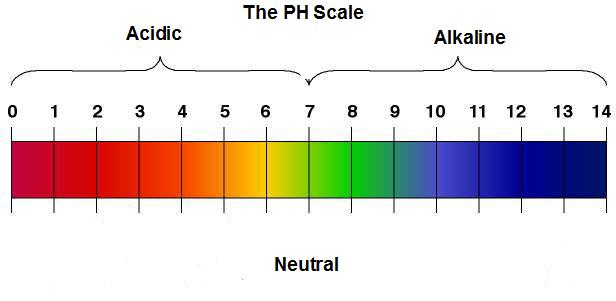
 The pH scale is numbered from 0 (or -5 in the case of super acids) to 14, 0-7 being acidic and 7-14 being basic, or alkaline. 7 is neutral (like water) and is neither acidic nor basic. pH is the amount of activity of solvated hydrogen ion in an object. This value is determined by adding the object to universal indicator paper that changes colour according to the pH value of the chemical. It is made of water, propan-1-ol, phenolphthalein sodium salt, sodium hydroxide, methyl red, bromothymol blue, monosodium salt, and thymol blue monosodium salt. The pH scale is logarithmic, and works in powers of ten. For example, an acid with a pH value of 2 will be 10 to the power of 2 times more acidic than one with a pH value of 4.
Tuesday, 15 January 2013
pH Scales!
The pH scale is numbered from 0 (or -5 in the case of super acids) to 14, 0-7 being acidic and 7-14 being basic, or alkaline. 7 is neutral (like water) and is neither acidic nor basic. pH is the amount of activity of solvated hydrogen ion in an object. This value is determined by adding the object to universal indicator paper that changes colour according to the pH value of the chemical. It is made of water, propan-1-ol, phenolphthalein sodium salt, sodium hydroxide, methyl red, bromothymol blue, monosodium salt, and thymol blue monosodium salt. The pH scale is logarithmic, and works in powers of ten. For example, an acid with a pH value of 2 will be 10 to the power of 2 times more acidic than one with a pH value of 4.

Subscribe to:
Post Comments (Atom)
No comments:
Post a Comment