Showing posts with label science. Show all posts

Tuesday, 10 March 2015

Science Reflection #2

Honesty!

Our teaching of chemistry is currently dropping into a more complicated form- temperature, mathematics, and even particle physics are being integrated. Notably, we happened to be studying equation solving at around the same time we were first introduced into heat, temperature, and calorie calculations. A good amount of time is spent on common misconceptions, f.x. temperature vs. heat, dissolving vs. melting. However, more time is spent on proving concepts physically than introducing new information, which slowed progress slightly. States of matter was not exactly a total cranial detonation moment. Many of its concepts had already been introduced in previous grades.

Science goes forward as usual, however changes do occur. The problem is, the majority of these improvements are not held for long enough to be of any effect and only serve to disrupt activities. The substitute teacher was clearly necessary, and she was a competent teacher and generally knowledgeable in the subject of Chemistry, however her presence caused a change in the normal science schedule: we complete an entry task, the teacher grants a short lecture, we perform an experiment, and then fill out some worksheets. The simplicity of this plan makes learning easier, but also forces us to adapt to this particular schedule. When a substitute, who is not thoroughly fluent in this planning, takes control of our class, the schedule is broken. And then, when the schedule is reverted, things fall apart again. The repercussions were not far too large as the majority of our work with the substitute was pre-planned and low on instruction, making the substitute more of a resource than a teacher. Our current schedule could be improved, but is currently working. Perhaps a running resource point could be provided, or some kind of more tangible note-taking method could be provided, as at current many students must remember formulas or numbers from the start-of-class lecture that are often only repeated once.

Wednesday, 17 September 2014

Science Reflection- Unit 1, Science Basics: Scientific Method and the Metric Systrem

This unit in science we have learnt the very basics of science- designing experiment, making graphs, science tools, measuring processes, and unit conversion.

Our first few classes were pre-occupied with scientific tools, what they are, what they look like, what you use them for. Each student was granted an item and they had to figure out what it was. I received a concave glass lens known as a watch glass for holding dry chemicals. By far the most interesting was Ethan's striker, which was a flint and steel tool used for making short sparks to ignite chemicals. We later learned all of the tools, and then has a short test on our memorization of the tools.

Afterwards, we learnt the six basic Metric system prefixes, milli, centi, deci, deca, hecto, and kilo. Probably, it would not have been nearly as easy if it wasn't for the remembrance phrase: King Henry Doesn't Usually Drink Chocolate Milk. The metric system gave me some trouble at first, but I think I figured it out.

By far my favorite part of science so far has been chemical ignition of a gummy bear and acidic destruction of a protein. Probably the most hilarious and stereotypical science displays I have seen in a long time. They have both proved that science this year will probably turn out fine.

Wednesday, 9 April 2014

Walking Sticks!

1.  What would you predict would happen to a population of bright green walking sticks that move onto a bamboo thicket? Why do you predict this (use your data)!
In my data, over the first three generations, all bright green insects and all brown insects went extinct. Chances are the bright green insects would be killed.


2. Why did one color of walking stick become the dominant variety in the wood chip environment over five generations?
Brown walking sticks. They blended in best, so they were harder to click.


3.  Which walking stick was best adapted to each environment? How did you know?
Bright green did best in bush, green did best in bamboo, and brown did best in wood chips.


4. Based on the reading, Limiting Factors, which limiting factor or factors play a role in this model?  How do you know?
Well, lack of food for the walking sticks could be problematic, because even if no predator can see the sticks, the insects could still die of starvation. Without food, the population wouldn't be able to create new insects. Maybe stick insects can only reproduce or lay eggs in a certain place. Maybe brown stick insects lay white eggs that stand out like sore thumbs in wood chip environment, and so the insects need a white environment to hide their eggs. Or maybe the winter will wipe out the insects because they have no food, or no shelter, or no place to blend in.

Wednesday, 5 March 2014

Dairy Farm Reflection

What was my field trip to the Dairy Farm like? Well, we didn't see much dairy, and we didn't see much farm. Sadly, most of the original rainforest has been cut down to make way for dairy farming, but the jungle has taken most of its original land back. The soil here is dry, because there isn't much rain nowadays. We learned about a snake that could burrow underground by using its tail as a pick, but with the ground growing harder, this is growing increasingly difficult. Also, the forest is no longer shielded from wind, because of the BKE cutting down the guardian trees that block the wind, so the forest is being destroyed quickly. The soil is so dry, we might even see the extinction on certain burrowers in Singapore, which could topple the ecosystem. The soil in the SAS forest is also inhospitable for burrowers, so Bukit Timah, MacRitchie, and Botanic Gardens might also be facing the same problem.

Did you know, rubber seeds explode? When they have grown to a certain size, they disperse by firing a chemical explosion which launches the seeds into the air. In a light-poor area, this helps disperse the seed over large distance. The explosions that punctuated the cicadas in the forest scared lots of people in our group, but I think the most frightening of what Raj taught is about was the flying snake. By flattening its body, it can glide over fifty meters from the top of a tree (where in blazes are the aerodynamics of that?) and crash land into its preys face. Imagine being attacked by one of those...

Luckily, SAS doesn't have any of those.

Hopefully.
The Burrowing and Probably Harmless Snake

Wednesday, 5 February 2014

Biosphere Science Query

The idea of living on mars could cool, but what benefit would it have? If something bad happened, we would probably all die, and there would be no way out. There is also no way back if you regret living on mars. The human body also isn't accustomed to living on mars, so living there could be very uncomfertable, Therefore, I probably wouldn't go to mars.

The main thing we need is air. With plants, that should be easy enough. Then we need food. Plants could solve that reasonably easily also. The main problem is probably exercise. In zero-g, the human body expands, and that could easily break your spine if your muscles aren't strong enough. Exercising equipment would be required. Otherwise, life could be sustained easily enough.

A comet could easily destroy everyting. The tiniest piece of space dust could crack the dome and all life would freeze, burn, suffocate, or explode. No more biosphere. This has happened to the ISS many times, so biossphere is susceptible too.

Wednesday, 22 January 2014

Wet Market Reflection

Last science class (21st of January 2014 on a Tuesday) we went to a wet market to look at fruits and vegetable and spices and all sorts of other plant life. Well, right now it would be plant death. We, in groups of two, looked each at three fruits and three vegetables. Also, some of the groups were given money to buy a particular fruit or vegetable, including ours, but we never got to buy our starfruit because Sheng Siong Market was out of starfruit. As far as I know, our group was the only one that failed to buy a fruit.
Here's a list of all the fruit we took notes on:

Lotus Root
Lotus root is long a tubular. It seems to have an unattractive color, and an unattractive taste, so it probably doesn't spread its seeds through animals. Inside the lotus root are large holes, possibly for seeds, or possibly filled with air to float, or maybe even to decrease the amount of root the lotus has to grow.

Chili
Chili is small and red. It quite obviously does not like animals. It has a distinct spicy taste which animals quite obviously would hate, and its red color serves probably as a warning. The store has a whole bunch of fresh chillies, so they are obviously very easy to grow in our climate. Or maybe chillies just grow a whole bunch of seed pods on one plant, explaining their quite diminutive size.

Eggplant
Eggplant is oblong, and also quite nice smelling. The eggplants large size and juiciness probably means the eggplant seed pod can survive for a very long time, and is packed full of useful nutrients. Perhaps the nutrients can also be used to attract animals to eat them.

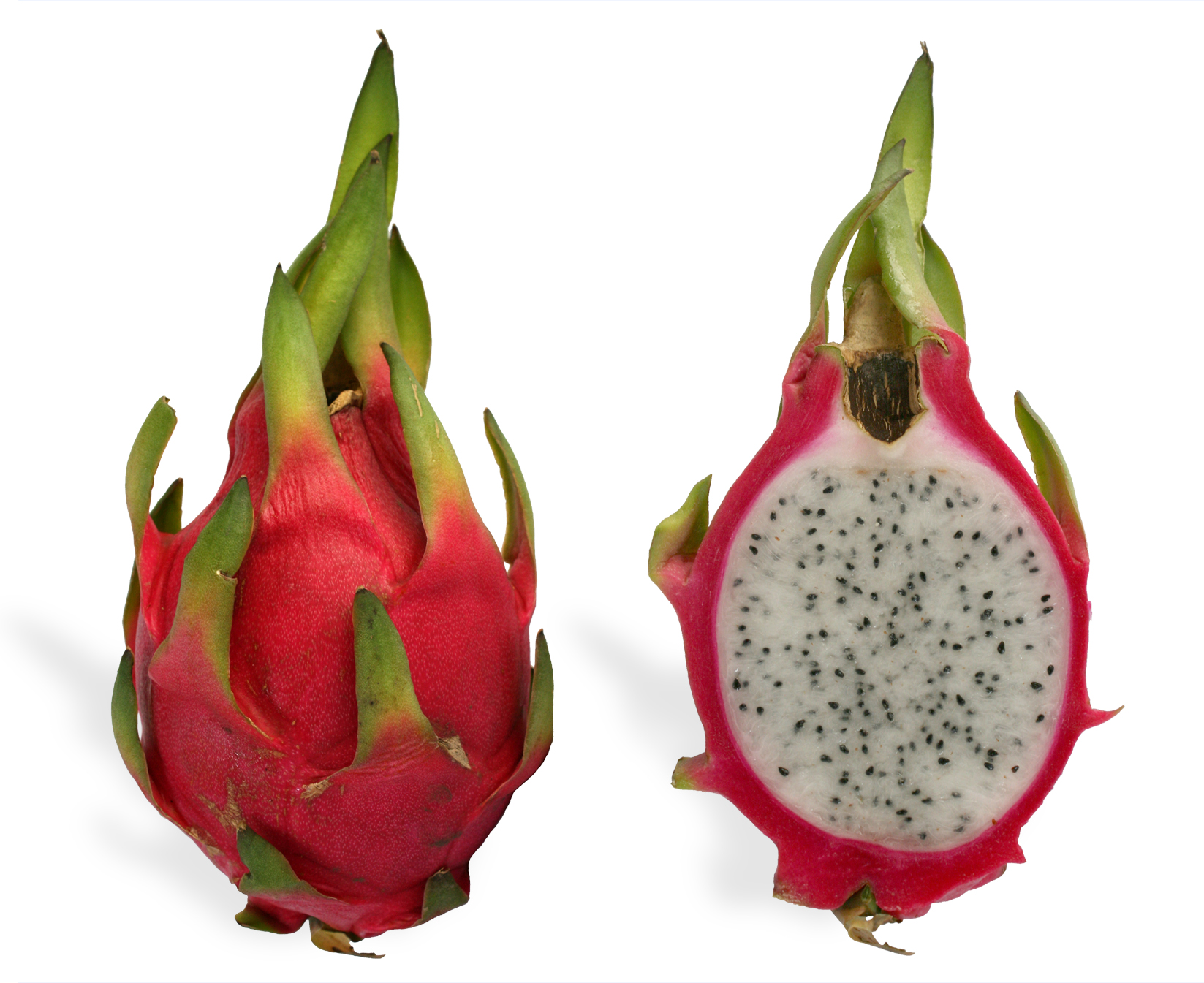
Dragonfruit
Dragonfruit (why does my spellchecker say this is wrong?) is very colorful. And, as Ryan said, demented shaped. The colors probably serve to attract animals, and so does the smell and sweet flesh. The flesh contains thousands of tiny hard black seeds. Make tons of tiny versions and hope one will survive?

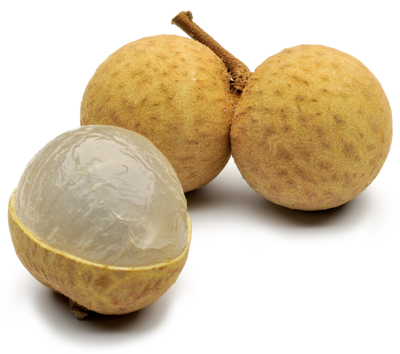
Longan
Longan is relatively small and brown, about the size of a cherry or grape. It is extremely sweet tasting, again just like grapes, and contains a single large brown seed in the middle. This fruit is definitely animal spread, as the flesh is delicious and the seed is hard and undigestible.

Guava
Guava is a large and extremely watery fruit. The skin is about as hard as the flesh, slightly harder than a firm apple. The guava is, compared to most fruits, surprisingly un-sweet. One type of guava is bright pink on the inside. Small seeds reside inside the fruit.

The question is: Why are there so many fruits, vegetables, and spices? Other than, of course, that humans like eating different things. I think because if there are more types of plants that can do different things, it means that plants can grow almost anywhere. The more different capabilities, the more chance plants have of overtaking more places.

Sources:
http://www.joyharari.com/content/uploads/2012/10/Lotus_root.jpg
http://www.rna-seqblog.com/wp-content/uploads/2013/01/chili-peppers.gif
http://imgsrv.gardening.ktsa.com/image/ktsag/UserFiles/Image/E_Images/eggplant.jpg
http://upload.wikimedia.org/wikipedia/commons/4/43/Pitaya_cross_section_ed2.jpg
http://www.newhealthguide.org/images/10415496/image001.jpg
http://wiki-fitness.com/wp-content/uploads/2013/04/guava01.jpg

Wednesday, 20 November 2013

The Gigantic Explosive Magma-Spewing Murderous Monstrosities that Have Been Benefitting Us All Along

When you think about volcanoes, you probably think of them as a major problem to mankind- massacring tons of people with each explosion. Well, here's a bigger problem: How do we get power without polluting the atmosphere? Water is too inefficient, solar only works in the sun, nuclear can irradiate the landscape with one puncture. That leaves Geothermal Energy- obtaining power from the heat of a volcano. No pollution, no inefficiency, no special timing, no danger of explosions!
So volcanoes are amazing ways to create free power. Also, volcanic ash, which might seem to pollute, actually fertilizes the soil making some of the most nutrient-rich plants on the earth! Massive savannah are created by volcanoes. So for one year, death and destruction, but for the next twenty years, LIFE!
And of course the garden variety benefits- gemstones, natural spas, all sorts of reasonably average benefits.
So volcanoes are actually useful!

Tuesday, 8 October 2013

Pakistan Creates Island out of Nowhere!

On around October 1, a island of hardened mud sprang out of the ground. Scientist have been working on the case for about a week and they claim that the island is a mud volcano, created when scalding hot water mixes with methane, carbon dioxide, and several other gases and sediments. If this mix finds an opening, such as one opened by an earthquake, the mud will shoot out and generate a tiny island.
Either that, or aliens are messing with us.
The link is here: http://www.foxnews.com/science/2013/10/06/new-photos-pakistan-earthquake-island/
But if you're just looking for weird islands coming out of nowhere, try this: http://www.livescience.com/28828-10-strangest-sights-google-earth.html
(IMAGE 2)

Saturday, 17 August 2013

Squid Jet Propulsion: Genius!

Google Science Fair has picked its finalists!
Movement-Enhancing Gloves and Battery-Free Flashlights are cool, but I think the winner of the Science Fair should be Alex Spiride (13) and his squid jet propulsion robot.
It does need a pole above the water to pump in air, but it has the benefits of not disrupting the ecosystem: it's sounds just like a squid swimming in the water, letting scientists approach marine life without causing alarm. It also can't kill marine life with a propeller. It's highly efficient with power and can get up to speeds of 30 Cm./Sec. It easily outperforms any man-made submarine.
I hope scientists begin using this system to power their submarines. If you want to look closer, go to This Website.

Monday, 12 August 2013

Creating class labels

How to Perform Text-to-Speech


How to use the text-to-speech feature for MacBook Air.
Explained with Shakespeares 18th Sonnet. For no Reason
Also, T-T-S doesn't seem to work in the URL zone. I wonder why...

Credits for the sonnet is here: http://www.shakespeare-online.com/sonnets/18.html